
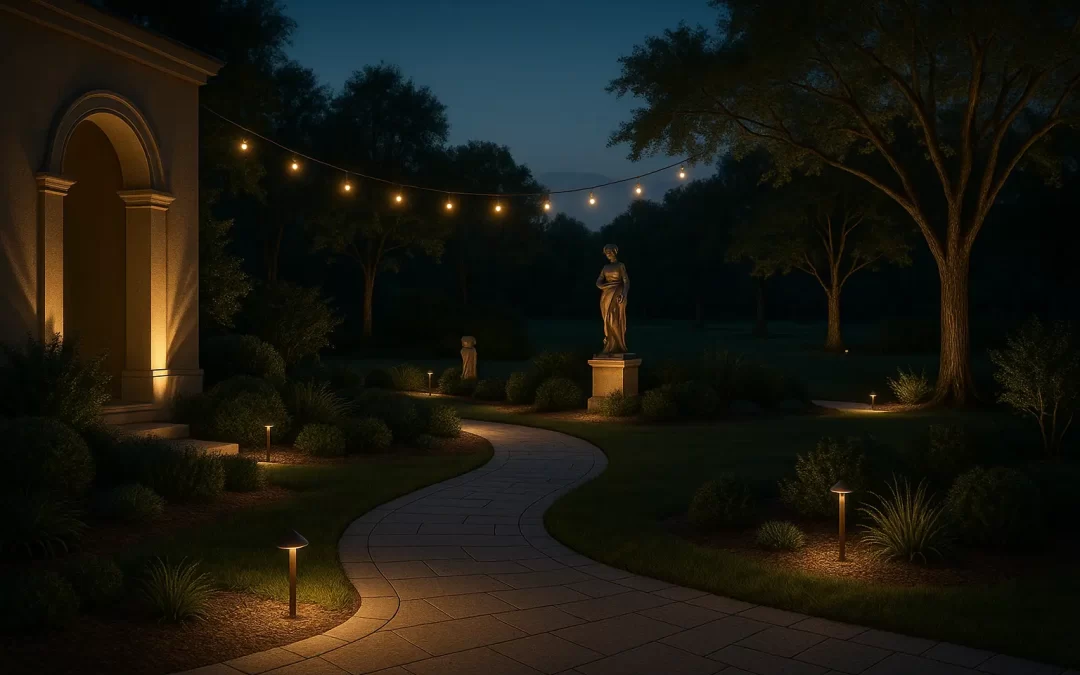
Want to transform your outdoor space with lighting that truly stands out? You’re in the right place. This comprehensive guide will walk you through the art of designing outdoor lighting that is safe and highlights your landscape’s beauty.
But what’s the secret to achieving stunning illumination? We’ll explore every essential step that turns ordinary nights into extraordinary experiences.
Ready? Set? Let’s design.
Key Takeaways
- Effective outdoor lighting design improves aesthetics, safety, and functionality while increasing property value.
- A detailed lighting plan and proper fixture selection are important for achieving balanced light levels and highlighting key landscape features.
- Incorporating energy-efficient LED lights and smart control systems improves convenience, reduces costs, and increases the performance of outdoor lighting.
- Using layers of lighting techniques adds depth and visual interest to outdoor spaces.
Understanding Outdoor Lighting Design
Outdoor lighting serves multiple purposes: upgrading aesthetics, improving safety, and aiding functionality in outdoor spaces. Strategically placed lights can illuminate pathways and entrances, reducing the risk of accidents and making your home more inviting.
Moreover, highlighting attractive features like architectural details or garden sculptures can create a visually appealing and welcoming atmosphere. One way to do this is to ensure fixtures are wet rated for exposed areas or damp rated for covered spots to withstand weather.
You may also consider dark-sky compliant options to minimize light pollution.
Planning Your Outdoor Lighting Layout
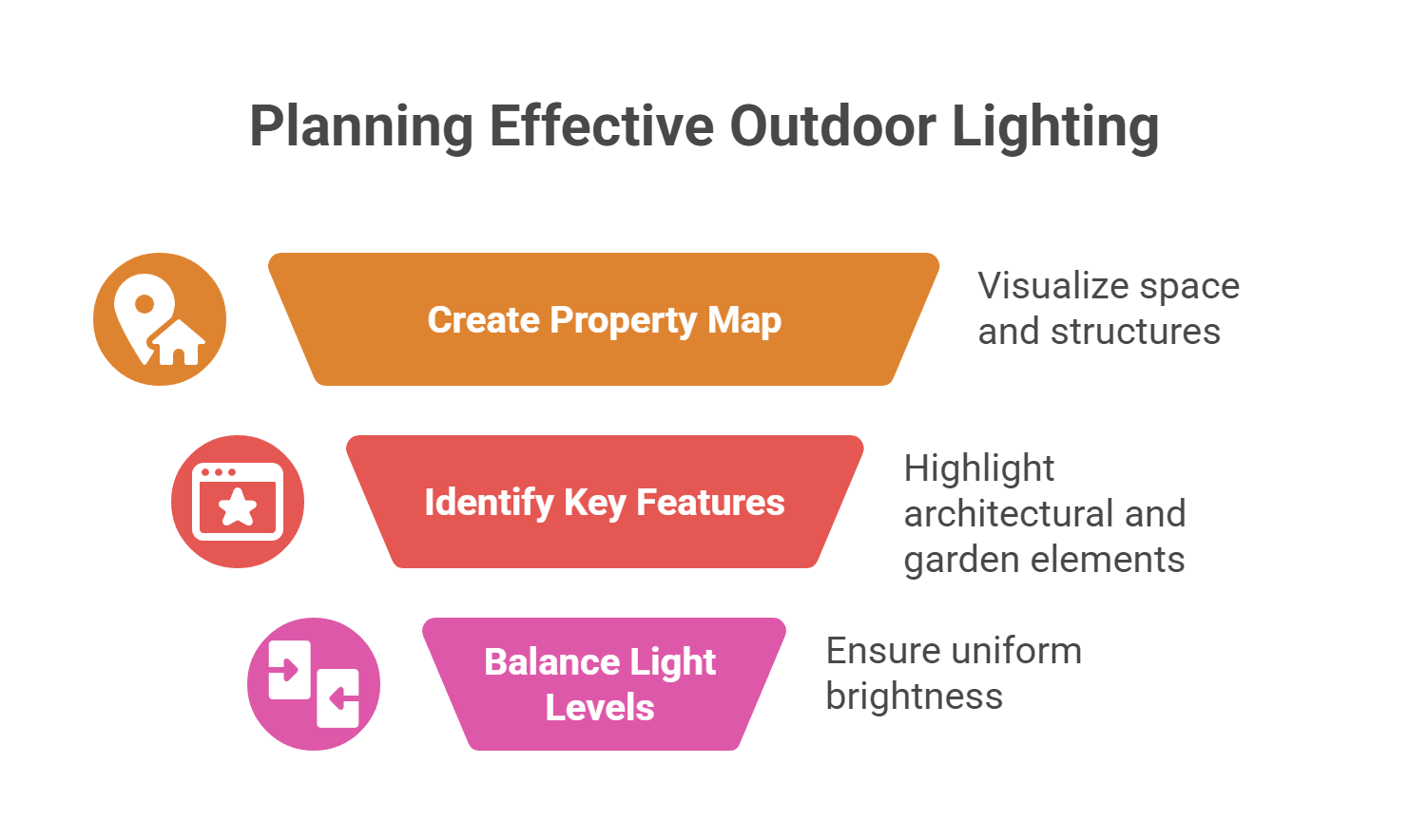
A successful outdoor lighting project starts with a detailed lighting plan. Clarifying your goals and recognizing the unique features of your environment leads to an effective lighting design.
Working with a lighting professional can help achieve the desired effect, but even as a DIY enthusiast, you can create a stunning design with the right guidance. Consulting with a lighting specialist can help create the best outdoor lighting plan. And that’s what we’re going to explore in more detail below.
Creating a Property Map
A property map is the first step in planning your outdoor lighting. This drawing helps:
- Visualize the space,
- Pinpoint areas needing illumination,
- Include all structures and environmental elements to create even coverage and effective placement of fixtures.
This approach prevents common mistakes like uneven light distribution and helps a cohesive lighting design.
Identifying Key Features
Consider the activities that will take place in different areas and the intensity of light required. One important feature to consider is how the lighting will improve these elements.
Proceed to highlight architectural elements, statues, and garden structures with directional lights to create focal points and avoid the mistake of having too many lights in one area while others remain dark.
Consider using accent lighting to amplify these features. Bullet lights, which are compact fixtures often used with narrow-beam bulbs, are ideal for precise lighting of these elements. Well lights provide illumination without the fixture itself being visible, making them perfect for uplighting the underside of plant foliage.
Balancing Light Levels
To avoid overly bright or dark areas in your outdoor design, balanced light levels become non-negotiable. Proper spacing and careful consideration of light distribution help create a harmonious and inviting atmosphere.
A general rule is to place outdoor lights no closer than 20 feet apart for uniform brightness. This approach ensures that your lighting system is both functional and appealing.
Types of Outdoor Lighting Fixtures
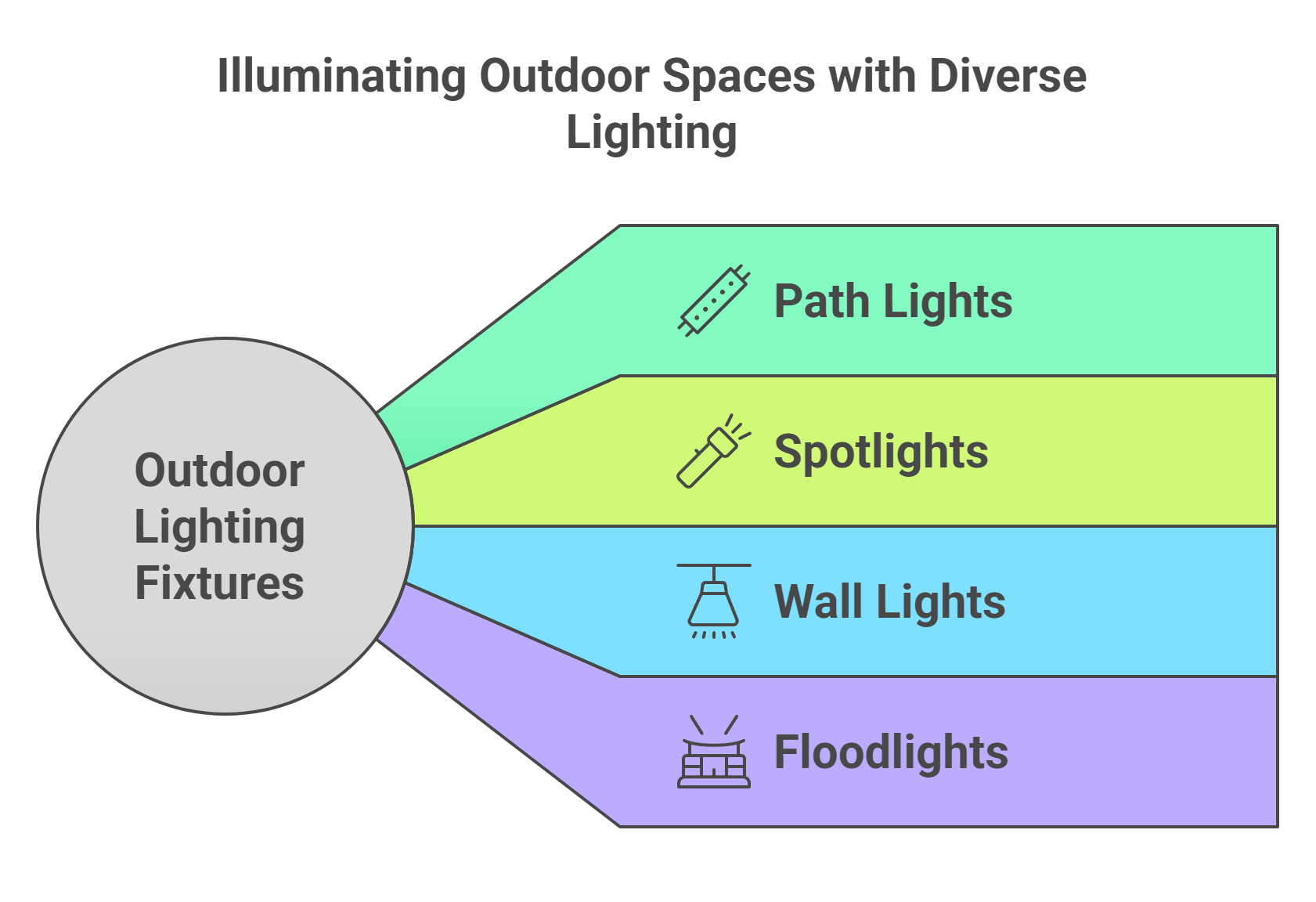
Different types of light fixtures serve various purposes. The obvious one is illuminating pathways, and the other is highlighting architectural features.
Investing in high-quality fixtures adds significant value to your home, making it more beautiful and durable.
Let’s explore the key types of fixtures and how each can transform your outdoor areas.
Path Lights
Path lights help guide visitors through your outdoor spaces and should be spaced six to eight feet apart for optimal glow.
Typically, path lights are small posts with built-in lights that can either frame areas or line walkways. For instance, Small Mushroom Path Lights are ideal for making pathways both safer and more inviting. Imagine your guests feeling welcomed and secure as they stroll under the gentle glow. Garden lights are usually mounted on 18- to 24-inch posts and designed to illuminate planting beds or serve as pathway markers.
Spotlights
Spotlights are powerful tools for highlighting specific outdoor elements like trees and unique garden structures. Within this category, bullet lights stand out for their precision. Combining sharp, focused beams with softer wash lighting creates a balanced and visually appealing atmosphere that draws attention to your favorite outdoor features.
Wall Lights
Usually fixed on vertical surfaces such as porch walls, wall lights provide ambient illumination while accentuating architectural designs. Wall lights make your home feel more welcoming and secure, especially when placed strategically around entryways and patios.
Floodlights
With floodlights, you can be sure that large areas like your driveway or backyard will be well lit, typically 40 degrees or more. Their bright, expansive light helps prevent dark spots where intruders might hide, making them a strong security asset.
Understanding the purpose and effects of these lighting fixtures brings you one step closer to designing a stunning and functional outdoor lighting scheme that wows you every time .
Technical Considerations for Outdoor Lighting Design
With professional installers, the technicalities of installations are often sorted out, especially because they adhere to local codes to provide safe, efficient installation. DIY outdoor lighting installation can be rewarding for homeowners who are comfortable with basic electrical work and have a planned design.
Grasping these technical aspects helps avoid common pitfalls and gives your space the ambience that it deserves.
Low Voltage vs. Line Voltage Systems
Low-voltage systems, typically using 12 volts, are safer and more suitable for outdoor environments. They offer easier installation and reduced safety risks compared to line voltage systems, which require additional safety features like conduit and junction boxes. Most modern landscape lighting systems use low-voltage power, which is safer and more cost-effective than traditional 120-volt systems.
It’s essential to check local building codes and consult a professional before placing transformers in a low-voltage system.
Wiring Methods
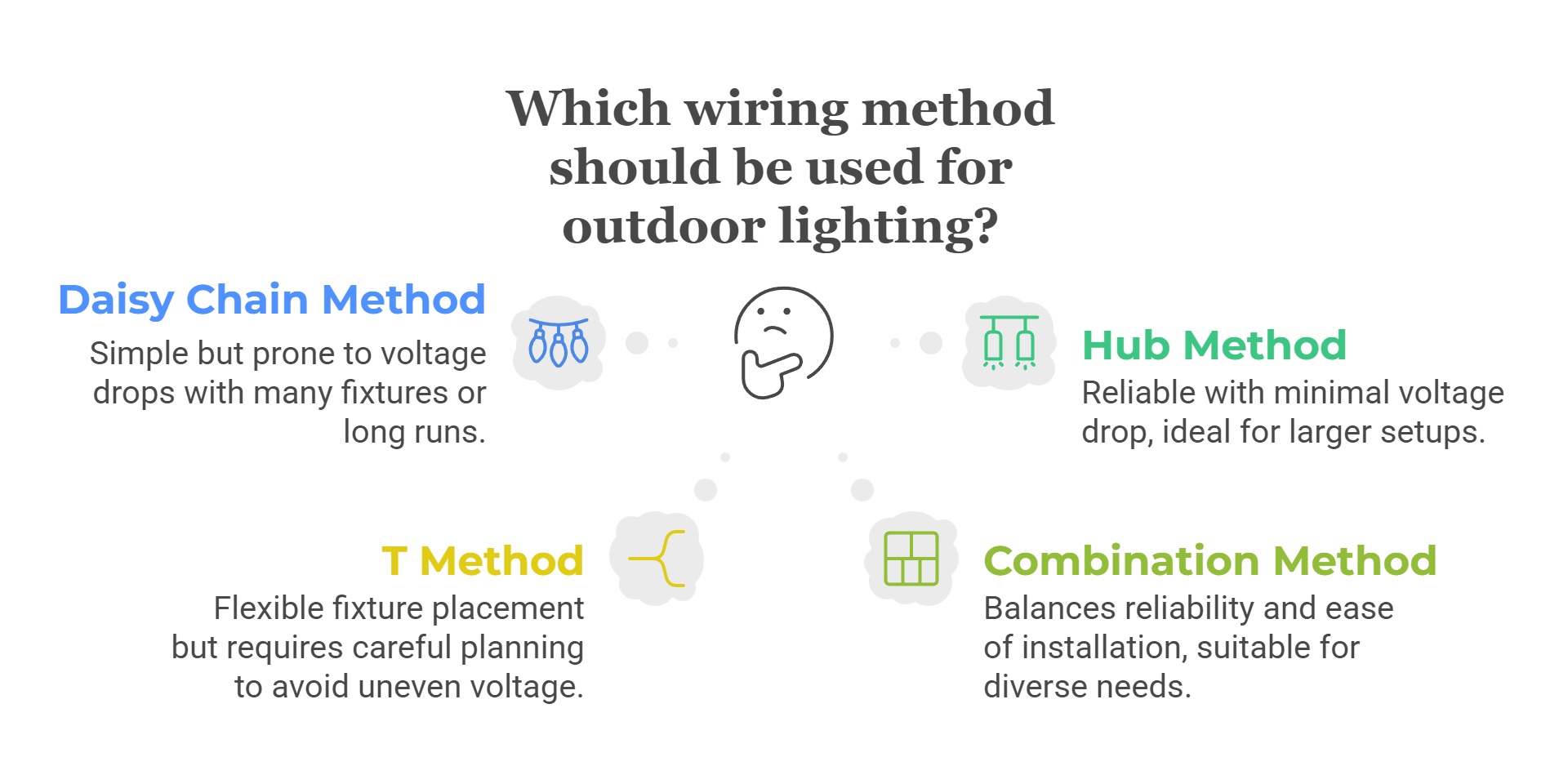
Different wiring methods for outdoor lighting installations include:
- Daisy Chain Method: This involves connecting fixtures in a series along a single wire run. It’s simple but may experience voltage drops if fixtures are spaced too far apart or if there are too many fixtures on one run.
- Hub Method: This method uses a central hub from which individual wires run directly to each fixture. The Hub method helps avoid voltage drop and contributes to a more reliable lighting system, especially for larger setups.
- T Method: In this approach, wires branch off from a main line in a ‘T’ formation to reach various fixtures. It offers flexibility in fixture placement but requires careful planning to avoid uneven voltage distribution.
- Combination Method: Combining different wiring styles can optimize the layout based on your specific outdoor space and lighting needs. This approach balances reliability and ease of installation.
To ensure a successful wiring installation, consider these tips:
- Bury cables at least 6 inches deep to protect them from damage and comply with safety standards.
- Size transformers to exceed the total fixture wattage by 25% to accommodate future lighting additions without overloading the system.
- Use weatherproof connectors and enclosures to protect wiring connections from moisture and corrosion.
- Plan wire routes to minimize length and avoid sharp bends, which can cause damage over time.
- Test voltage at fixtures before final installation to ensure consistent brightness across all lights.
Proper planning and execution of your wire runs play a huge role in delivering a dependable and effective outdoor lighting system.
Managing Voltage Drop
Managing voltage drop is key to maintaining consistent light output across fixtures. Thicker cables help maintain voltage levels, preventing performance issues. So, how does this work?
Voltage drop occurs when electrical current flows through a conductor, causing a reduction in voltage as the distance increases. But with proper management, your outdoor lighting system will perform optimally.
Decorative and Functional Lighting Ideas
Some ways you can refine the ambiance of your environment include:
- Uplighting
- Downlighting
- Incorporating water features
- Using string lights
Uplighting and Downlighting Techniques
Uplighting and downlighting are fundamental techniques in landscape lighting. Uplighting highlights focal points like sculptures or landscaping, while downlighting illuminates paths and driveways for visibility.
Downlights are typically mounted high in trees or structures to cast light downward, mimicking natural moonlight and creating a serene ambiance. Combining bullet lights and wash lights can effectively highlight architectural features and create a balanced lighting design. Wash lights produce soft, diffuse light ideal for illuminating flat surfaces like facades and garden walls.
Incorporating Water Features
Lighting has a great effect on water features by creating reflections and adding interest. Underwater lights are effective for ponds and fountains, while spotlights highlight cascades or statues near water.
Using uplighting on surrounding trees and downlighting from overhead fixtures emphasizes the water’s movement and creates a dramatic effect with shadows.
Creating Ambiance with String Lights
String lights are a versatile option for creating a cozy and inviting atmosphere in outdoor spaces. Using warm color temperatures in LED string lights helps create a comfortable ambiance, while bistro lights can mimic the charm of outdoor cafes.
Energy Efficiency and Smart Controls
Energy efficiency and smart controls are essential for modern energy efficient outdoor lighting systems. These features reduce electricity costs and environmental impact while improving convenience and power control.
Smart lighting systems allow you to control settings remotely, leading to greater energy savings and a more natural light experience with advanced lighting technology.
Benefits of LED Lights
LED lights are known for their energy efficiency and durability. They consume less energy compared to traditional bulbs and can last about 25 times longer, resulting in less frequent replacements. LED bulbs use at least 75 percent less energy than incandescent bulbs and can last around 25 times longer.
While the upfront costs may be higher, the long-term savings make LED lights a smart investment for outdoor lighting.
Smart Lighting Systems
Smart lighting systems provide improved control and energy savings. They can be controlled via an app, which helps homeowners to customize and pre-program lighting schemes.
Integration with home automation systems provides even more convenience and functionality.
Maintenance and Troubleshooting Tips
Regular maintenance and troubleshooting are crucial for keeping your outdoor lighting system functional. A proactive approach to maintenance helps prevent common issues and ensures the longevity of your lighting fixtures. Many homeowners underestimate the complexity involved in outdoor lighting installation, often leading to mistakes.
Investing in maintenance visits at least quarterly or twice a year can catch issues early and keep your system in top condition.
Routine Fixture Care
Routine maintenance includes regular inspections, cleaning fixtures, and adjusting for daylight savings. Cleaning light fixtures with mild soap avoids damaging finishes, keeping them effective and visually appealing.
Common Issues and Solutions
Common issues in outdoor lighting include broken bulbs, wires surfacing, and debris accumulation. Regular inspections can help catch these problems early and keep your lighting system functioning properly.
For corrosion in coastal areas, use marine grade minerals and clean with a vinegar water mix regularly.
Summary
In conclusion, designing outdoor lighting is not as hard as you think. Just by following this comprehensive guide, you can create a stunning and functional outdoor space that keeps you wowed all the time.
Start planning your outdoor lighting project today and transform your space into an illuminated paradise.
Frequently Asked Questions
How do I create a landscape lighting layout?
To create an effective landscape lighting layout, begin with a property map to visualize fixture placements and identify key features to highlight, ensuring balanced light levels for even illumination.
Which outdoor light fixtures are most energy-efficient?
LED lights are the most energy-efficient outdoor light fixtures, as they consume less energy and have a longer lifespan compared to traditional bulbs.
What height should outdoor lights be installed at?
For optimal effectiveness, outdoor wall lights should generally be installed at a height of 60 to 80 inches from the ground.
Is it safe to install outdoor lighting myself?
It is generally safer to consult a professional for outdoor lighting installation to ensure compliance with local codes and safety standards. This minimizes risks associated with electrical work and improper installation.
How do I calculate the correct wattage for outdoor lighting?
To calculate the correct wattage for outdoor lighting, sum the wattages of all fixtures and ensure the total is within 80% of the transformer’s capacity for low voltage systems.